
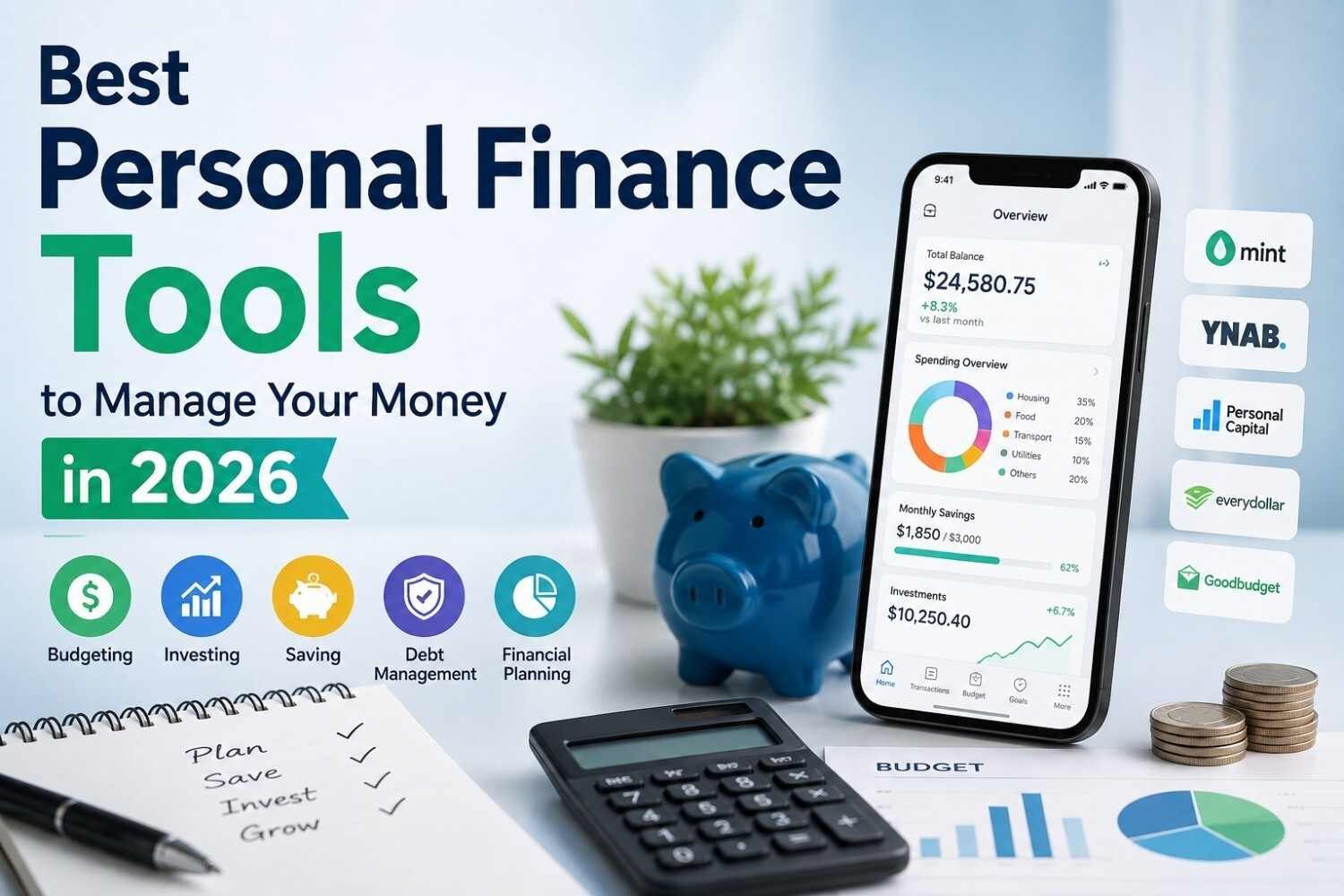
Managing money has become more complicated as people deal with everyday expenses, savings goals, credit, investments, insurance, taxes, and retirement planning. The right personal finance tools can make it easier to understand where your money goes and build a more organized financial strategy.
From simple budgeting tools and expense trackers to advanced financial planning software, there are now many options designed for different financial needs.
In this guide, we'll look at the most useful types of money management tools you can use in 2026 and explain what to look for when choosing one.
What Are Personal Finance Tools?
Personal finance tools are apps, software platforms, calculators, and online services that help individuals manage different aspects of their finances.
Depending on the platform, a personal finance tool may help you track income and expenses, create and maintain a budget, monitor credit, manage savings goals, calculate loan payments, plan for retirement, estimate taxes, track investments, analyze spending habits, and organize financial accounts.
Some tools are designed for basic budgeting, while others provide more comprehensive financial planning and wealth management features.
1. Budgeting Tools
Budgeting is one of the most important parts of personal money management. Modern budgeting tools can automatically organize transactions, categorize expenses, and show how much money you're spending in different areas.
A good budgeting tool can help you understand monthly income, housing expenses, food and grocery spending, transportation costs, subscription expenses, debt payments, savings contributions, and discretionary spending.
Instead of manually calculating everything in a spreadsheet, budgeting software can provide a centralized view of your finances.
What to Look For in a Budgeting Tool
- Automatic expense categorization
- Budget alerts
- Spending reports
- Savings goals
- Account synchronization
- Recurring expense tracking
- Monthly financial summaries
For someone who wants a simple solution, a basic budgeting app may be enough. Users with more complicated finances may prefer comprehensive personal financial management software.
2. Expense Tracking Tools
Expense tracking is another important part of managing personal finances. An expense tracker helps you identify where your money is going each month. This can reveal unnecessary subscriptions, excessive discretionary spending, or categories where you may be able to reduce expenses.
Some financial apps automatically categorize transactions, while others allow users to enter expenses manually.
When comparing expense tracking tools, look for real-time transaction updates, spending categories, custom reports, monthly comparisons, recurring payment tracking, and budget integration.
Combining expense tracking with budgeting can give you a much clearer picture of your overall financial position.
3. Financial Planning Tools
People with multiple financial goals may benefit from financial planning tools. These platforms can help organize different areas of your financial life, including emergency savings, debt management, investment planning, retirement savings, insurance planning, tax planning, and long-term financial goals.
A financial planning tool can be especially useful when you're trying to determine how today's financial decisions could affect your future goals. For more complex situations, some people may also work with a professional financial advisor alongside financial planning software.
4. Investment Planning Tools
Investment planning is another area where financial technology has become increasingly useful. Investment planning tools can help users organize portfolios, analyze asset allocation, calculate potential growth, and monitor investment goals.
Common features include portfolio tracking, asset allocation analysis, investment calculators, return calculations, goal planning, risk analysis, and performance reports.
An investment calculator can also help estimate how regular contributions and potential returns could affect long-term savings. However, calculator projections are estimates rather than guarantees. Actual investment performance can vary significantly.
5. Retirement Planning Calculators
Retirement planning requires estimating how much money you may need in the future. A retirement calculator can help estimate potential retirement savings based on factors such as current savings, age, expected retirement age, monthly contributions, estimated investment returns, and expected retirement expenses.
Some advanced retirement planning tools can also model different savings scenarios. For example, you can compare what might happen if you increase your monthly retirement contribution or delay retirement by several years.
6. Credit Monitoring Tools
Credit can influence important financial decisions, including borrowing and financing. Credit monitoring tools can help users keep track of their credit information and receive alerts about certain changes.
Depending on the service, features may include credit score monitoring, credit report access, account alerts, identity monitoring, credit education, and fraud notifications.
Understanding your credit profile can be particularly useful before applying for major financing such as a mortgage or auto loan.
7. Mortgage and Loan Calculators
People considering a home purchase or loan can use mortgage calculators and loan calculators to estimate potential payments.
A mortgage payment calculator can help estimate principal and interest, monthly payments, total interest, loan costs, and different interest-rate scenarios. Similarly, a personal loan calculator can help compare different loan amounts, interest rates, and repayment periods.
These tools don't replace an official quote from a lender, but they can help users understand the numbers before making a financial decision.
8. Tax Planning Tools
Tax preparation and planning can become complicated when income, deductions, investments, and other financial factors are involved. Tax tools and tax calculators can help users estimate potential tax obligations and organize information before preparing a return.
Useful features can include income tax calculations, deduction estimates, tax bracket information, self-employment calculations, tax planning scenarios, and filing preparation.
Tax rules vary by country and can change over time, so users should verify important tax information with current government resources or qualified professionals.
9. Savings and Goal-Tracking Tools
Saving money becomes easier when you have a specific target. Savings tools can help users establish goals such as emergency funds, home down payments, vacation savings, education expenses, major purchases, and retirement contributions.
A savings calculator can also show how regular contributions may accumulate over time. Automated savings features can be particularly useful for people who want to make saving a consistent financial habit.
10. All-in-One Money Management Software
Some users don't want separate applications for every financial task. An all-in-one personal finance software platform may combine budgeting, expense tracking, account monitoring, savings goals, investment tracking, financial reports, and credit monitoring.
These platforms can provide a centralized financial dashboard and reduce the need to maintain information across multiple applications. However, comprehensive software may have more features than a user actually needs, so it's important to compare pricing and functionality before choosing one.
How to Choose the Right Personal Finance Tool
The best money management tool depends on your financial situation and goals. Before choosing a platform, consider these factors:
Security
Financial applications may handle sensitive information. Look for reputable providers with appropriate security measures, encryption, authentication options, and transparent privacy policies.
Features
Don't pay for advanced features you won't use. Someone who only needs expense tracking may not need sophisticated wealth management software.
Ease of Use
A complicated interface can make financial management harder rather than easier. Look for a platform that makes important information easy to understand.
Pricing
Some personal finance apps are free, while others use subscriptions or premium plans. Compare the cost against the features you actually need.
Account Integration
If you want automatic financial tracking, check whether the tool supports the financial institutions and account types you use.
Personal Finance Tools vs. Financial Advisors
Software can make financial management easier, but it isn't always a replacement for professional advice.
A personal finance application can help with tracking, calculations, budgeting, organization, and financial education. A qualified financial professional may provide personalized guidance based on your circumstances and financial goals.
For major decisions involving investments, taxes, retirement, insurance, or significant borrowing, professional advice may be appropriate.
Final Thoughts
The right personal finance tools can make budgeting, saving, investing, and financial planning much easier.
For basic money management, start with a reliable budgeting tool and expense tracker. If you're working toward long-term goals, consider adding financial planning tools, retirement calculators, investment planning software, and savings tools.
The most important thing isn't having the most expensive financial software. It's choosing tools that help you consistently understand your finances and make informed decisions.