
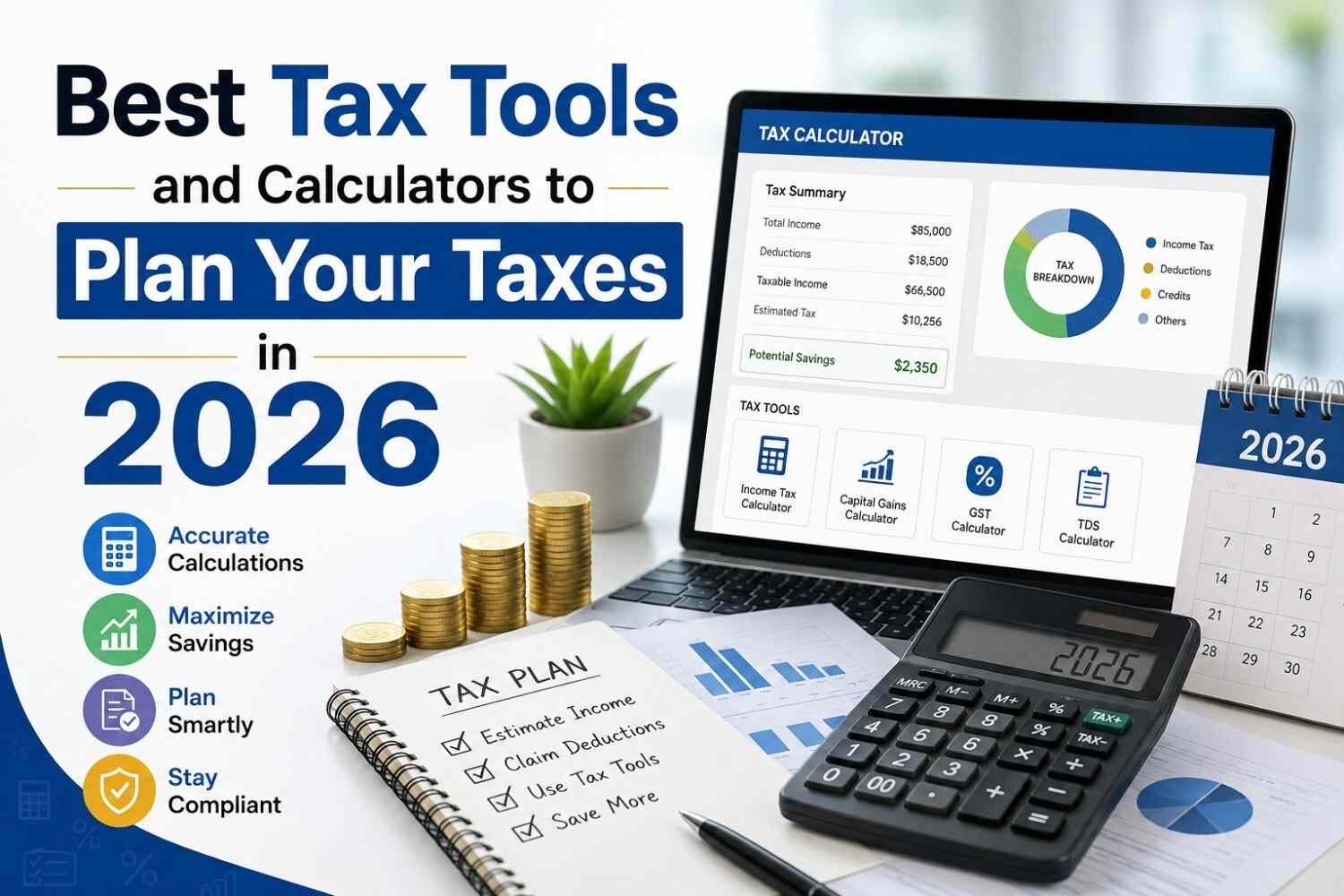
Planning your taxes can be much easier when you have the right tax tools and calculators at your fingertips. Whether you want to estimate your federal income tax, understand potential deductions, calculate your tax withholding, or prepare for tax season, online financial tools can help you organize the numbers before you file.
For 2026, the IRS has updated numerous tax provisions, including tax brackets and standard deduction amounts. That makes it especially useful to review your estimated income, deductions, credits, and withholding throughout the year rather than waiting until tax filing time.
In this guide, we'll look at the most useful tax calculators, tax planning tools, tax preparation tools, and income tax calculators you can use to better understand your potential tax situation.
1. Income Tax Calculator
An income tax calculator is one of the most useful starting points for tax planning. A good calculator can help you estimate your potential federal income tax based on factors such as annual income, filing status, taxable income, deductions, tax credits, federal tax withholding, and other sources of income.
The important thing to remember is that an estimate is not the same as your final tax liability. Your actual result can change depending on your complete tax return and the deductions or credits you qualify for.
For 2026, federal individual tax rates remain at 10%, 12%, 22%, 24%, 32%, 35%, and 37%, with the applicable bracket depending on filing status and taxable income.
2. Tax Withholding Calculator
A tax withholding calculator can help employees determine whether they are having an appropriate amount of federal income tax withheld from their paychecks.
The IRS Tax Withholding Estimator uses information such as income, withholding, deductions, and credits to estimate your federal tax liability and withholding position. This can be particularly useful after major financial or life changes, including starting a new job, getting married, getting divorced, receiving a significant income increase, starting self-employment, having a child, buying a home, or adding another source of income.
The IRS recommends checking withholding periodically, particularly when your financial circumstances change.
3. Tax Bracket Calculator
A tax bracket calculator can help you understand which federal marginal tax bracket applies to your taxable income.
One common misconception is that reaching a higher tax bracket means all of your income is taxed at that higher rate. Federal income tax brackets are marginal, meaning different portions of taxable income can be taxed at different rates.
For 2026, the highest federal marginal rate is 37%. For single filers, that rate applies to taxable income above $640,600; for married couples filing jointly, the threshold is $768,700. A tax bracket calculator can therefore be useful when comparing different income levels or planning deductions.
4. Tax Deduction Calculator
A tax deduction calculator can help estimate how deductions may affect taxable income.
For 2026, the standard deduction is:
| Filing Status | 2026 Standard Deduction |
|---|---|
| Single | $16,100 |
| Married Filing Jointly | $32,200 |
| Head of Household | $24,150 |
| Married Filing Separately | $16,100 |
These amounts are based on the IRS's 2026 inflation adjustments. Depending on your situation, you may also need to consider whether itemizing deductions could be appropriate. A tax deduction calculator can help you compare potential scenarios before completing your return.
5. Tax Credit Calculator
Tax credits are another important part of tax planning. Unlike deductions, which generally reduce taxable income, tax credits can directly reduce the amount of tax owed, subject to the rules that apply to each credit.
Potentially relevant credits can vary depending on factors such as income, filing status, number of dependents, education expenses, child-related circumstances, energy-related improvements, and employment situation.
Because eligibility rules can be complicated, a tax credit calculator can provide a useful starting point, but taxpayers should verify eligibility against current IRS guidance.
6. Self-Employment Tax Calculator
If you're a freelancer, independent contractor, gig worker, or business owner, a self-employment tax calculator can be particularly useful.
Unlike traditional employees, self-employed individuals may need to account for both income tax and self-employment tax when estimating their overall tax obligations. Useful information to gather includes business income, business expenses, estimated quarterly payments, other taxable income, retirement contributions, and applicable deductions.
Keeping accurate records throughout the year can make tax preparation considerably easier.
7. Capital Gains Tax Calculator
Investors may also benefit from a capital gains tax calculator. Capital gains can arise when you sell investments or other capital assets for more than your adjusted basis.
The tax treatment can depend on factors such as purchase price, sale price, holding period, taxable income, filing status, and type of asset. A capital gains calculator can help investors estimate potential tax consequences before selling an asset.
However, investment taxation can be complicated, so calculator results should be treated as estimates rather than personalized tax advice.
8. Retirement Tax Calculator
Retirement planning and taxes are closely connected. A retirement tax calculator can help you explore how different retirement income sources may affect your future tax situation.
Depending on your circumstances, retirement income could come from 401(k) accounts, Traditional IRAs, Roth IRAs, pension income, Social Security, investment accounts, and other savings. A retirement calculator can combine estimated income and tax assumptions to help you understand how much money you may need during retirement.
9. Tax Preparation Software
For taxpayers who want more than a basic calculator, tax preparation software can provide a more comprehensive workflow.
Tax software may help with importing financial information, calculating taxable income, identifying potential deductions, checking available credits, preparing federal tax forms, reviewing calculations, and filing electronically.
Different tax software products are designed for different levels of complexity, so it's worth comparing features and pricing before selecting one.
10. Estimated Tax Payment Calculator
If you receive income that doesn't have enough federal tax withheld, an estimated tax calculator can help you plan potential payments.
This can be particularly relevant for freelancers, self-employed workers, contractors, business owners, investors, and individuals with multiple income sources. The IRS provides worksheets and tools for projecting 2026 federal income tax liability and comparing it with expected withholding and estimated payments.
What Tax Information Should You Gather Before Using a Calculator?
For a more useful estimate, gather as much relevant information as possible.
Income Information
Depending on your situation, this could include salary or wages, self-employment income, interest income, dividend income, investment gains, retirement income, rental income, and other taxable income.
Deduction Information
You may also need information related to mortgage interest, charitable contributions, business expenses, retirement contributions, education expenses, and other potentially deductible expenses.
Tax Withholding Information
For withholding calculations, your recent paystub can be particularly useful. The IRS notes that entering the correct federal withholding amounts is important because mistakes in this information can significantly affect the estimate.
Why Use Tax Calculators During the Year?
Waiting until tax season to think about taxes can make financial planning harder. Using tax planning tools throughout the year can help you:
- Estimate – Get an early idea of potential federal tax liability.
- Plan – Understand how income, deductions, and credits could affect your tax situation.
- Adjust – Review your withholding when your circumstances change.
- Prepare – Organize documents and information before tax filing.
- Compare – Explore different financial scenarios before making major decisions.
The IRS Tax Withholding Estimator has also been updated to reflect 2026 changes, including provisions related to tips, overtime, car-loan interest, seniors, family-related credits, homeownership, and charitable giving.
How to Choose the Right Tax Calculator
Not every tax calculator is designed for the same purpose.
If you want to estimate your overall federal tax, start with an income tax calculator. If you're concerned about your paycheck withholding, use a tax withholding calculator. If you're comparing deductions, look for a tax deduction calculator. If you're planning retirement, consider a retirement tax calculator. For investment sales, a capital gains tax calculator may be more relevant.
And if you have a complicated financial situation, comprehensive tax preparation software may provide more functionality than a simple calculator.
Final Thoughts
The right tax tools and calculators can make tax planning much easier. An income tax calculator can provide an initial estimate, while tax bracket, deduction, credit, withholding, capital gains, and retirement calculators can help you analyze specific parts of your financial situation.
For 2026, updated federal tax brackets and standard deduction amounts make it particularly important to use current information when estimating your taxes.
Remember that online calculators provide estimates. Your actual tax liability depends on your complete financial circumstances and the tax rules applicable to you. For complex situations, consider reviewing your circumstances with a qualified tax professional.